

Repairs That Stop Active Leaks Quickly
Storm Damage Roof Repair in Tillsonburg for wind-lifted shingles, hail impact damage, and water intrusion after severe weather events
Severe weather creates specific failure patterns on roofs: wind lifts shingle edges and tears sections away from valleys where two planes meet, hail impacts crack shingle surfaces and dislodge protective granules, and heavy rain overwhelms flashing at chimneys or penetrations where sealant has deteriorated. You need storm damage repair when water stains appear on ceilings after a weather event, when you see missing or damaged shingles from ground level, or when debris from fallen branches punctures the roof surface. PBW Rooftops responds to emergency repair requests in Tillsonburg and surrounding areas with temporary tarping to stop active leaks followed by permanent repairs that restore weather protection and document damage for insurance claim support.
Emergency roof repairs begin with leak detection to identify entry points, since water travels along rafters or deck seams before dripping through ceiling penetrations that may be located far from the actual roof damage. Wind damage repair involves replacing lifted or missing shingles and securing edges that lost their sealant bond, while hail damage restoration may require replacing entire sections where impacts compromised shingle integrity across multiple courses.
Call immediately after storm damage occurs to arrange emergency tarping and damage assessment before additional weather exposure worsens the problem.
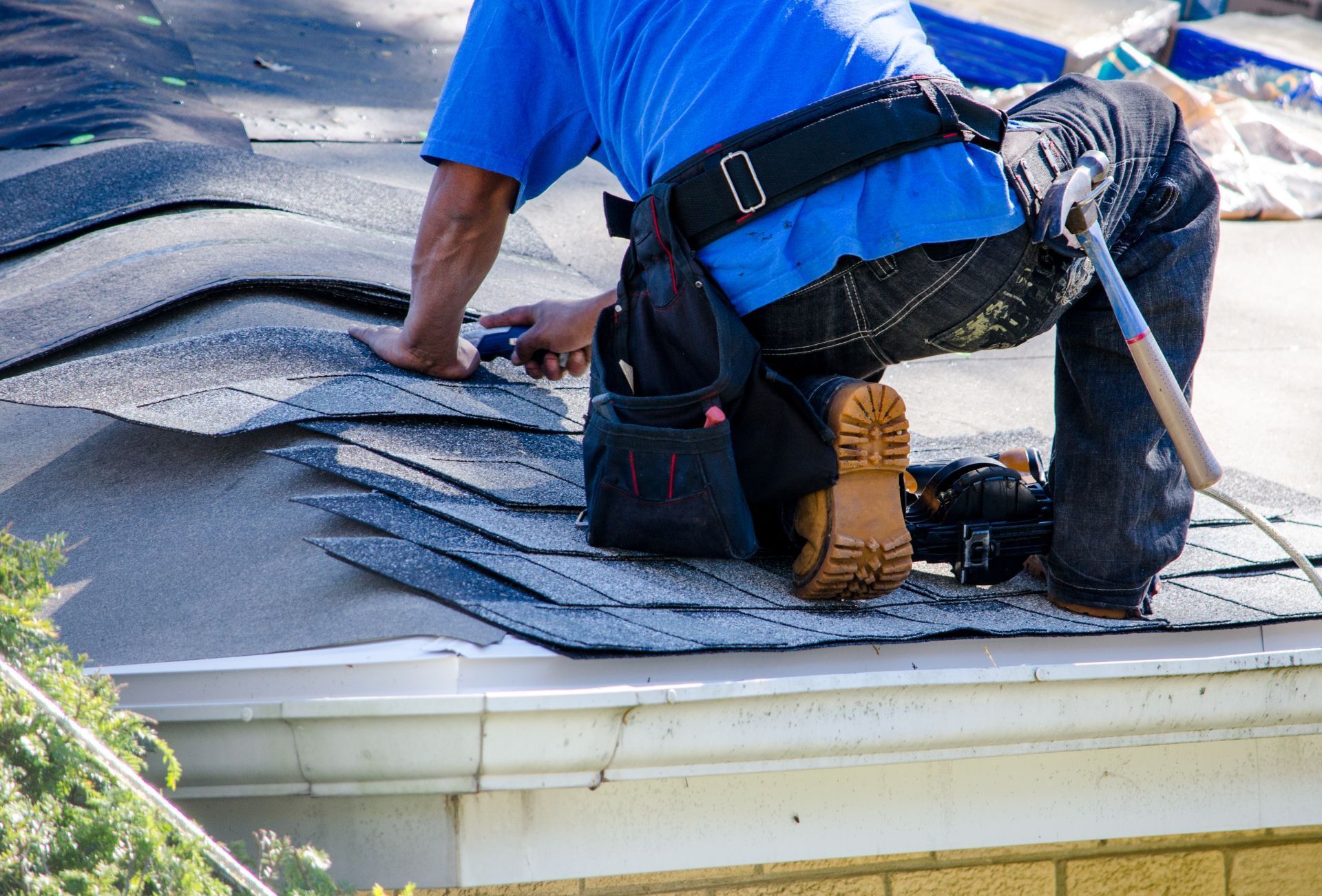
What Storm Damage Repair Actually Accomplishes
Temporary roof tarping provides immediate protection by covering damaged sections with reinforced polyethylene secured through intact shingle areas, which prevents rain infiltration while permanent repair materials are sourced and insurance claims are processed. The tarp remains effective for weeks or months depending on wind exposure and UV degradation, though permanent repairs should proceed as quickly as insurance approval and material availability allow.
After repairs complete, water stops entering at the damage location, ceiling stains stop expanding though discoloration remains until interior surfaces are repainted, and your roof passes insurance inspection for claim settlement. Hail damage often affects shingles across the entire roof even when only some impacts created visible cracks, which means insurance adjusters evaluate overall shingle condition rather than repairing isolated damage points when hail compromised the system's remaining service life.
Insurance claim support includes documentation photography that shows damage extent, written assessments that quantify repair scope, and direct communication with adjusters who need technical details about failure patterns and necessary repairs. Fast response matters because additional rain after initial damage can create interior water damage that complicates claims and increases total repair costs beyond the roof itself.
Questions Before Starting Your Project
Homeowners dealing with storm damage in Tillsonburg often need answers to these urgent questions.
What immediate steps prevent additional damage while waiting for permanent repairs?
Placing tarps over compromised sections stops water entry, removing standing water from attics prevents insulation damage and structural deterioration, and documenting damage with photographs preserves evidence for insurance claims before conditions change.
How do insurance adjusters determine whether damage requires repair or full replacement?
Adjusters evaluate what percentage of the roof shows damage, whether remaining shingles have adequate service life left, and if repair materials can be matched to existing shingles that may no longer be manufactured in the same color or style.
What wind speeds typically cause shingle damage in this region?
Sustained winds above seventy kilometers per hour can lift shingle edges on roofs with aging sealant, while gusts exceeding ninety kilometers per hour tear sections away even on newer roofs, particularly at ridge lines and eave edges where wind force concentrates during storms.
When should temporary tarping be replaced with permanent repairs?
Tarps provide reliable protection for four to eight weeks under normal conditions, but should be replaced sooner if high winds threaten to tear them loose or if insurance approval comes through quickly and weather permits permanent work.
What hail size creates damage that requires professional evaluation?
Hail larger than two centimeters in diameter typically causes visible impact damage on asphalt shingles, while smaller hail may crack protective granules without creating obvious surface damage that becomes apparent only through close inspection from roof level.
PBW Rooftops provides emergency response for active leaks and comprehensive damage assessment that documents conditions for insurance claims. Contact our team immediately after storm events to schedule tarping and inspection that protects your home and preserves your claim rights.